Foto Friday

Seen from the Germantown Bridge, originally uploaded by Sabra Smith.
I’ve driven over the Germantown Bridge for years and never seen this curious structure, set amid the floodplain of the Wissahickon Creek, at the edge of the Chestnut Hill College Campus.
There’s an app to find Historic Places
 In my last post, I wished there were an app that would give you the ability to stand on a street corner and pull up a photo of how the area used to appear.
While looking for something like that, I came across something different, but of interest. The app is quite appropriately called “Historic Places” from Groundspeak, the same folk who track geocaches hidden all over the country. The ninety-nine cent app is both useful and a bargain, sparing you the burden of lugging around maps or guidebooks and encouraging locals and tourists alike to drop in on places of interest they might not know about.
Pull up the app, which knows your current location, and it will show you a list or map of nearby sites. Click on an item of interest for a photo and more info. Want to visit? You can navigate by map or a built-in compass that will guide you to your destination.

The list of featured places includes historic districts, notable sites, buildings, structures and objects that are significant in history, architecture, archaeology, engineering, or cultural heritage.


There are over 44,000 community-submitted historic places of interest listed — with locations worldwide, so you can find something of interest whether you are in San Francisco or Sao Paulo.


Are you a Route 66 fanatic? Gaga for Georgian? You can filter locations so only historic sites of interest show — thus fans of bridges, or Gilded Age mansions, or industrial sites can hone in on what they love.
This highly-rated app has only just begun — more features are promised!
Foto Friday
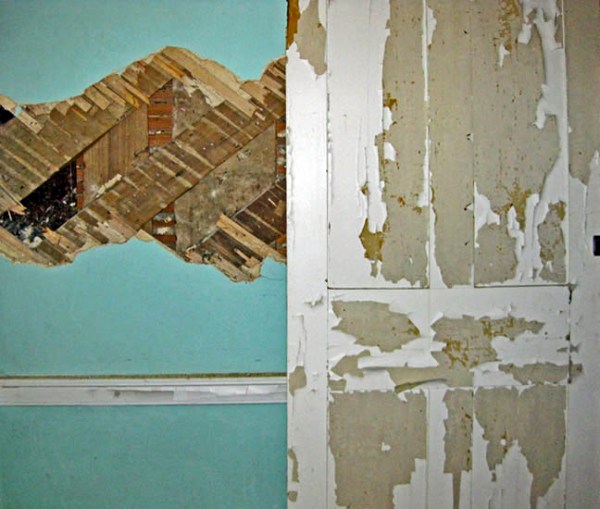 Sellers Hall, Upper Darby, Click image to visit Friends of Sellers Hall.
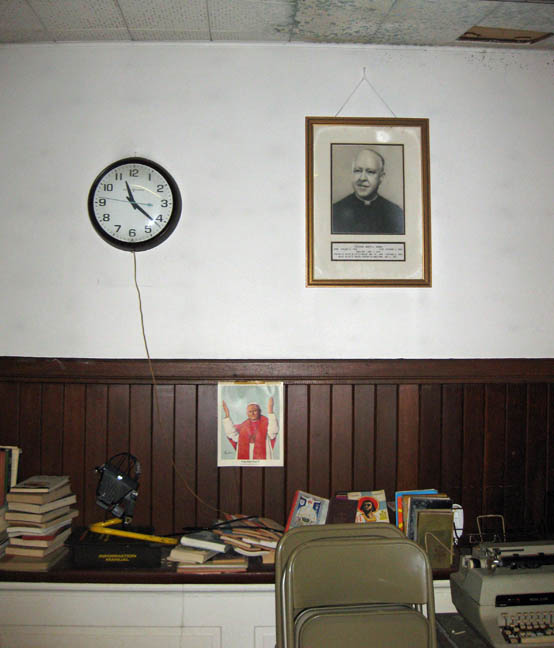

Post-its from the past

Someday my cafe will come, by Ben Dayhoe, Santa Ana, CA (he's looking to interest some entrepreneur in this prime piece of real estate; click image to read the note on his photo)
The National Trust for Historic Preservation has its “This Place Matters” project that encourages anyone and everyone to submit photographs of a site that speaks to them. While many of the places have a history, the pictures are all of the now.
In a wonderful variation on the idea, edrabbit curates a flickr gallery called “Looking into the Past” that layers past and present onto place. (Images above and below are from his gallery)
I’m so amazed by the idea and images, I’m running to pilfer my dad’s old cardboard boxes of photographs to find images I can slap, like a historical post-it, onto the real location.
Is there an app to access images like this? There should be. Imagine walking down the street, suddenly feeling a craving for time travel, clicking a button and — zap — there you are at the corner of past meets present.

Thomas Circle, Washington, D.C., Photo by Jason Powell
Foto Friday
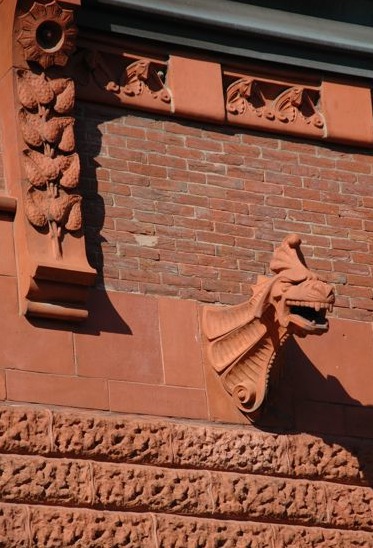
WalkPhila says mark your calendar!
WalkPhila sends the following calendar alerts for your historic preservation pleasure!
 The Friends of Laurel Hill Cemetery present AN OLD CEMETERY IN A NEW YEAR: AN INTRODUCTION TO LAUREL HILL Sunday, January 17, 2010, 2:00 p.m. Laurel Hill Cemetery, 3822 Ridge Avenue, Philadelphia, PA 19132 $15/person; $12/members; $10/seniors and students; children are free Phone (215) 228-8200 or email tours@thelaurelhillcemetery.org more info http://www.thelaurelhillcemetery.org
An informative overview of Laurel Hill’s long and colorful history, this tour will include all of the highlights, hot spots and notable stories that afford the cemetery its WOW factor. This is the ultimate tour for first-time visitors to Laurel Hill, and anyone else who likes beautiful art, stimulating history, and just enjoying life…even amongst the dead.
****************************************************
 THE WOODLANDS CEMETERY — 2010 MARTIN LUTHER KING SERVICE DAY
Monday, January 18 from 2 to 4 p.m. 4000 Woodland Avenue, Philadelphia, 19104. Please RSVP to info@woodlandsphila.org
In honor of the 2010 Martin Luther King Service Day, this National Historic Landmark site invites everyone to help with clean-up and ivy trimming. We look forward to your help.
****************************************************
 Winterthur Museum presents DREAM HOUSE: THE WHITE HOUSE AS AN AMERICAN HOME
A Lecture and Book Signing January 19, 6:00 p.m. Copeland Lecture Hall Route 52, Winterthur DE Admission is Free. Donations appreciated.
Ulysses Grant Dietz, Senior Curator and Curator of Decorative Arts at the Newark Museum, will present a talk drawn from his book Dream House: The White House as an American Home, published fall 2009 by Acanthus Press. Dietz, a great-great grandson of Ulysses and Julia Grant, and his co-author Sam Watters have approached the White House from a perspective never before adopted in any study of the president’s home: they write about what is not there more than what is there today. They look at six distinct moments over the course of 160 years and compare the White House to prevailing notions of what the ideal home was in this country: the White House as Country House, as Villa, as Mansion, as Palace, as Suburban Home, and as Shrine. The White House and its grounds offer a microcosm of what happened with the American house and garden from 1800 until 1960. The surprise comes in the early 1960s. On one hand, Jacqueline Kennedy did exactly what every First Lady before her did: she created her personal Dream House as a setting for the American president. But, on the other hand, she also changed the White House forever. The White House most people think they know was invented in the early 1960s. Behind that Dream House lies a much bigger story of American aspiration and enterprise.
****************************************************
 Fairmount Water Works Interpretive Center DRINKING WATER AND PUBLIC HEALTH: CELEBRATING 100 YEARS OF WATER FILTRATION IN PHILADELPHIA
Wednesday, January 20, 5:30 pm to 7:30 pm http://www.fairmountwaterworks.com
Join Drew Brown and Adam Levine for an enlightening look at the history of water filtration in Philadelphia. Safe drinking water drawn from the Delaware and Schuylkill rivers is taken for granted in the city today. In the late 19th century, however, thousands of people died of water-borne bacterial diseases, such as typhoid fever, that were carried in the polluted river water. The construction of a massive water filtration system between 1901 and 1911 greatly reduced the incidence of such diseases, and made the act of drinking city water safe for the first time in decades.
This illustrated lecture will look at the politics, science and engineering of the filtration works that were the largest in the world at the time they were built. Drew Brown is PWD Manager of Public Education, and Adam Levine is a PWD Historical Consultant. Along with PWD Educator Ellen Schultz, they created an exhibit celebrating the 100th anniversary of water filtration in Philadelphia, which will be on display at FWWIC through the end of January.
****************************************************
 The Delaware Historical Society & New Castle Community History and Archaeology Program present READ HOUSE PALLADIAN WINDOW RE-INSTALLATION
Saturday, January 23, 2010 from 9:45-11:45 a.m., Read House & Gardens 42 The Strand, New Castle, Delaware Workshop admission is free, but space is limited, so reservations are necessary. Please contact Read House director Michele Anstine at 302-295-1002 or manstine@dehistory.org
In October 2009, the New Castle Community History and Archaeology Program (NCCHAP) sponsored a window repair workshop at the Read House. The workshop, through demonstration and commentary, focused on removing sashes as well as general historic window repair issues. During the workshop, Save America’s Treasures project carpenters will reinstall the sashes of the façade Palladian window, the most monumental in the house. The reinstallation process will be explained step by step, and participants will be able to ask questions about the repair and reinstallation of their own historic windows.
There’s always hope
An avenue of overarching trees leads from the road to the house which stands on a slight rise. A little to the west is St. Thomas’s Hill, thrice held by soldiers during the Revolutionary struggle. In front, to the north across the pike, the Wissahickon winds through peaceful meadows and beyond rises the long slope of wood-crowned Militia Hill-every rood of land full of historic memories. By the banks of the stream, with moss-grown dam and placid leat, is an ancient stone mill that once ground corn for all the Colonists far and near; even Sir William Keith used to send wain loads of grain hither all the way from Graeme Park at Horsham.
The state of Pennsylvania announced cuts to the state budget that have resulted in closure of several state-run historic sites. While I saw a lot on the news about how upset people were that Washington might not cross the Delaware on Christmas as he does every year at the aptly named “Washington Crossing,” I heard nary a whisper about Hope Lodge.

Don’t be quiet Hope Lodge.
Garage-sale style signs in front of the house gave dates for the annual holiday tour weekend (even though the website still listed 2008 information). Otherwise, all was silent. No going out of business signs. No Facebook page to start networking new support systems for the site or provide updates. Just business as usual, which means a lovely section of landscape on a busy road and a ghostly looking historic house.

When I heard the news, I thought they should announce a “Going out with a bang” party, something loud and racous on the front lawn, sponsored by some local corporation and the new pub across the street, complete with firing cannon and George Washington on horseback rallying the troops — and by rallying the troops I mean engaging the public imagination in imagining a new future for the site.
It’s time to get input from a broad array of local stakeholders. The challenge is getting the people who know of the site — whether they live nearby or are among the many who enjoy the vista on a daily commute — to identify themselves as a stakeholder and to become involved. And there’s nothing like indicating drastic measures are afoot to create interest.
That’s what preservation is possibly best known for — reacting to change.
Usually it’s a criticism — the lying down in front of bulldozer stereotype.
Now here’s a chance to show how preservationists can facilitate change. And part of creating a new future for Hope Lodge is getting people who don’t think of themselves as “preservationists” to become involved. (This also reinforces the need to devise a new word or redefine the existing one via this kind of outreach. See previous post.)
The local paper recently printed a letter from Jack Gumbrecht, presumably one of the Friends of... , to thank the public for their support of the holiday event. Attendance “was great” he says, though I wonder if visitation was down because people thought the site was closed? Was it up because people thought this might be their last chance to see inside? Thankfully, he also took the opportunity to announce that despite the closure, the Friends hope to develop a new plan for the site.
The Friends of Hope Lodge will be hosting a public meeting on the future of the Hope Lodge historic site on Wednesday, January 20, at 7pm. The meeting will be at the First Presbyterian Church, Bethlehem Pike and East Mill Road, Flourtown.
Hope Lodge was closed for visitation on November 20, 2009 due to the reduction in funding under the new state budget. The Friends plan to reopen the site to the public in the spring. We also want to establish a sustainable operating plan for the future. We believe the key to the future of Hope Lodge will be making the entire 40-plus acre site a more valuable community resource. At the public meeting, the Friends will present ideas for creating a Community Supported agriculture (CSA) venture at Hope Lodge, as well as some recreational and educational opportunities. We hope our presentation will spark constructive feedback, additional suggestions, and more involvement from the community. Please come to the public meeting on January 20, and encourage your friends and neighbors to come as well. If you cannot attend, you can still offer comments and suggestions through our website: www.ushistory.org/hope. Please visit the website and click on “Hope for the Future.”
Foto Friday
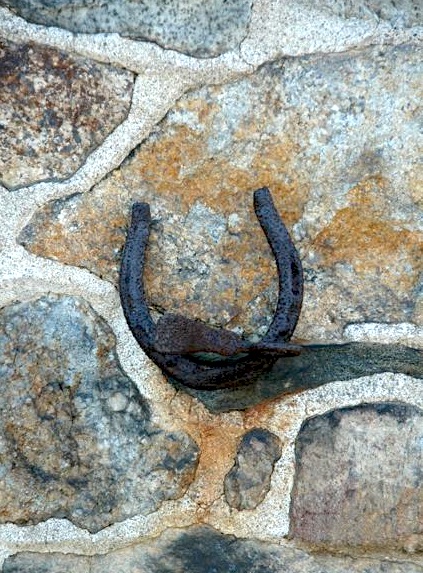
Hope your New Year is filled with good luck
The Museum of You?
Jane began to think about the sleigh. Really, a sleigh like this should be in a museum.
It was then that the idea of the Moffats having a museum popped into her head. A museum in the barn! A special museum! A collection of things that had been important to one, some, or all of the Moffats. THE MOFFAT MUSEUM!
In this town named Cranbury, where three thousand people lived…it said so on a sign at the Cumberland Avenue Bridge: “Entering Cranbury, population 3,000” … there was not one museum! There were schools, stores, houses, the library, the Town Hall, a green with two churches on it; and there were little brooks, large fields, some cows, and plenty of places to go to, take walks to or take a trolley car to: Savin Rock, Lighthouse Point, and more. But no museum of any sort… art, science, or anything! “There are museums,” Joey had told her, “for every known thing somewhere in the world.”….
“Ah!” murmured Jane, standing up now and going close to the barn. She addressed it. “Barn! You may soon become the first and only museum in Cranbury. No museum here? We’ll change that! ‘First’ things or any treasured things of any Moffat!”
 This exuberant brainstorm comes from Jane Moffat in The Moffat Museum by children’s author Eleanor Estes. It has me wondering what things my children would choose to put in a family museum. If we still observed elaborate mourning rituals, the youngest would probably create something related to the loss of his beloved plush squirrel, acquired when he was only two years old on an expedition to Central Park so I could do research for my first grad school paper. Would the eldest submit his dragon collection, or maybe the bike gloves he wore on a life-changing trip peddling with his grandfather from D.C. to Pittsburgh?
Why do we impart such meaning to objects? How do museums get visitors to make the same connections — or create their own emotional response? Objects become touchstones to our past, but as we lose touch with the story we disconnect from the artifacts. They lose meaning.
 Howard Mansfield studies this intriguing alchemy of object/meaning/memory/emotion in his book In the Memory House. In the first part, he describes his investigation of town histories and little one-room town museums. These places are the respositories of singular and community memory. A hall of hodge-podge revealing — what?
Brownington, Vermont, is home to the Old Stone House Museum and a grand total of 708 people at the time Mansfield was making his rounds.
The Orleans County Historical Society runs the Old Stone House Museum. This is a populist museum in a way that would set any curator’s teeth on edge. For sixty years people have been donating what they thought should be there. Sometimes these treasured objects were on their way to the dump when their owner hesitated, thought, “Oh what the heck, I’ve got a few minutes before the ball game,” and left it to the ages instead. Sometimes a rare eighteenth-century baby cradle is donated and sometimes a bottle filled with barley grain. That bottle is easily overshadowed by the other 4,999 objects in the collection, but it well explains the whole museum.
“This barley was grown in 1883 and given by Mrs. Selden Gray.” Why this? Why leave a bottle of grain in the perpetual care of neighbors and their descendants? Who would want to see it? It’s not even a rock collection, not a stuffed owl or a wedding dress or a three-shelf history of the light bulb.
Here’s my guess: To Mrs. Selden Gray it was the story of 1883 in a bottle: sowing the seed, the rainy spring, the dry summer (or the dry spring and the rainy summer), the blight that threatened, the sickness and health that came along that summer, the day they put aside their work to see the traveling carnival, the harvest, the harvest supper, the meals made from the barley, the animals fed, the barley bartered or sold to neighbors. A harvest corked for one hundred years, a low-tech time capsule. This was life, she was saying.
At least, that is what I presume. Maybe it was just some barley she had around the house. You can read too much into these things. The historical record is distorted by the nasty fact that surviving artifacts are unrepresentative. The Wedding Dress Problem, preservationists sometimes call it. Historical societies and house museums have many wedding dresses, but who saved the workday clothes? Few survive. The same with the houses saved; there are many mansions but few workingman’s cottages. — Howard Mansfield, In the Memory House
With all that we own in these days, in this consumer age, what objects will we impart with significance and reverence? Mansfield notes the significance “of what is saved and what discarded, who is remembered and why” — what memories will we “shepherd toward the next generation”?
What would you select to put in the museum?
Not long ago I read about an amazing property for sale in New Paltz — 147 acres, a farmhouse and two stone horsebarns, all formerly part of a utopian boys’ school and most recently home to a furniture manufacturing enterprise that relocated to Philadelphia’s Fishtown neighborhood.
All over the country there are extraordinary real estate parcels of this rarified breed. Breathtaking landscape, buildings — pedigreed and otherwise — that need special care, have spaces within that are a challenge to adapt because of size or layout. How to help them survive?
Barns vanish from the lansdcape with alarming regularity because of the upkeep they require and the inability of their owners to devise a practical non-agricultural use.

Shelburne Farms, click the image to learn about the history
For every National Historic Landmark Shelburne Farms, which has reinvented itself as a nonprofit environmental education center with its spend-the-night, buy-the-cheese, gather-at-the-barn-campfire survival plan, there are wonderful, special places struggling or losing the battle to remain intact. Land gets sold off for suburban housing, buildings are demolished and end their slow decline to oblivion.
This struggle is a portion of the tale told by Leila Philip in the memoir she wrote about her family and the farm she grew up on, an apple orchard outside Claverack, New York, just up the Hudson from the New Paltz place seen above. (Her book is A Family Place: A Hudson Valley Farm, Three Centuries, Five Wars, One Family)
Of course, to call it simply “a farm” is a vast understatement. The lands, the views, the rural roads and the Federal-style yellow house called Talavera (built circa 1812) are all part of a narrative that stretches back in history, and, the family hopes, will reach forward as well. But Philip describes the struggle to survive with a rawness and even a bit of anger that are lacking in the other house memoirs I’ve read. She writes as though there is no room for nostalgia on the brink of failure.
 While George Howe Colt’s description of the shabby make-do connected with his family’s summer place in Cape Cod (The Big House ) underscores the charm and eccentricity of the house and the family that built it, Philip seems to resent the fact that her generation has been born to shoulder the burden of a family legacy yet hasn’t the funds to maintain the house or even to pay bills if bad weather kills the apple crop that is their livelihood.
Her journey through the boxes and files stored throughout the house is, in some sense, a treasure hunt that desperately seeks to understand how her ancestors managed it all.
I told myself that I was sick of being bullied by a past I didn’t even know. But really I was scared, scared that like my father, I would get sucked into a way of living that revolved so much around Talavera that it lost touch with the larger world. If I looked, I could see signs of this in my own generation, in me. We all were a little too comfortable with Talavera’s state of disrepair, that slippery state of mild neglect and denial. Success in the outer world involved a strange sense of betrayal.
While Philip’s research uncovers startling discoveries about her ancestors and helps her come to terms with her inheritance, there is no map pointing her to a secret treasure. The pick-your-own orchard is a tenuous funding source and the house needs work (some of it detailed in a 2001 article in the New York Times). A reissue (click cover thumbnail or link above) updates the story and provides much-needed photographic accompaniment to the story of the place.


 Nostalgic for the original Wayback Machine?
 My Own Time Machine: Buildings, Places, People & Things