Driving the Imagination

Red Coats Toasting the Ladies of the House, by Howard Pyle
It gets dark so early now. My little family was nearing the end of a long drive home, zooming along the interstate. It was dark out with nothing much to see out the windows but the lights of cars on the highway and splotches of billboards and strip malls that we passed at high speed. One kid was asleep, the other was bored, bored, bored.
As we approached our exit, I remembered that Hope Lodge was hosting a Revolutionary War Re-enactment that weekend. “When I tell you, look out your window,” I alerted my eldest son.
Wow, he breathed. There was darkness, broken by the shimmer of fires, the glow of tents and the silhouettes of men moving and tall trees towering. The large stone house stood at the center of it, silent witness to one more event in centuries of watching.
It flashed by in a few seconds and was gone from view.
The scene captured his imagination. He started talking about the contrast between our cars on the highway and the life of a colonial. “Wouldn’t it be cool if you could, like, layer the lives so that there’d be ghosts of people from that time, and horses and carriages and the houses and roads from then?” He tried to imagine how alarmed people from that time would be to see our cars and the fast ribbon of light that is a modern highway at night. He pondered the intersection of it all. And I did too.
 Then, heading through the EZ pass lane, I started wondering why it’s called a “re-enactment” — I mean, it’s called that for obvious reasons. But isn’t it obvious that it’s a re-enactment? Is it possible it might feel more authentic and have more appeal if it were simply called a Revolutionary Camp out? Could they raise money to support the site by inviting interested kids or boy scouts or birthday party kids to come spend the night too, just as they do these days in natural history museums and aquariums (“Try sleeping with the fishes!”).
Hope Lodge is state-owned, has had its budget cut, and its small staff isn’t able to do a great job attracting visitors, publicizing events or creating new and innovative programs to build a broad new customer base. There’s the plant sale, the car show, the sheep shearing and colonial cooking demos — the same sorts of events one finds at historic sites everywhere else as they struggle to stay alive.
 And though drivers on the highway or the local road admire the stately building and appreciate the green space filled with this year’s soybean or corn crop, it’s not clear whether Hope Lodge as we know it now will be around much longer.
The site (and other state-owned sites) have begun a series of meetings and discussions to consider future options. The Hope Lodge website lists these possibilities:
Ownership/Management Alternatives
- Not-for-profit
- State
- County
- Township (Whitemarsh)
- DCNR (part of Fort Washington State Park)
- Corporate
- Academic (University, College, etc.)
- For-profit company
- Other Private Ownership
- Public-private combination
Use Concepts
- Historic Farm and Community Supported Agricultural (CSA) Farm
- Historic laboratory / Education facility for Professionals
- Student use (Vocational, farming, landscaping, art)
- Recreational use (athletic fields, etc.)
- Continue use as is
Do you know of a site that has faced these challenges? Do you have ideas for a new model, innovative practices? What do you think these underfunded sites should do?
I would love to see these discussions spread beyond “the usual suspects” within the history and preservation communities. The old historic house museum model is a mobius strip that always seems to come back to the same place. These sites need new thinking, new funding sources, new ideas for innovative community partnerships, social networking, retailing, daily use and ___________(fill in the blank with your own thought)
Pull on your brainstorming cap!
You go, Green Girl!
 At this point, sustainability has gone beyond fresh idea to become buzzword, bandwagon (for hopping on) and, sigh, in some circles, empty expression of trendiness.
A local institution, desirous of reusing an old masonry residence, recently forwarded a proposal they’d received from an architecture firm that specializes in sustainability (I sense I should wrap that word in quote marks here). I expected to review an interesting design document providing creative approaches for rehabbing the building to meet the needs of the institution. Instead the “green approach” this firm recommended amounted to gutting the place, removing the old windows, stripping off the porch — their attitude seemed to be that an old building just can’t be green and sustainable but if you insist, best only to use the shell of stone and then start over using “green materials.”
Oh, dear. That’s just not right. (For frustrating post on a similar topic, read “Nature Conservancy, Anonymous Posts and Demolition” at the PlaceEconomics Blog.)
We may have a new ally in the struggles to align preservation of old buildings with the green mentality. Oprah’s on the bandwagon and she’s brought along a friend with an old house.
Sustainability professor and “regular person” Simran Sethi just bought an 84 year-old house-of-her-dreams in the middle of the country and is going to walk the walk, not just talk the talk when it comes to sustainability. (How many cliches can I load into this post?)
She’ll be writing a blog on Oprah’s website sharing her experiences as she transforms her two-story house into a green home. She’ll demonstrate weatherstripping, insulation, and I will bet you my life savings she’ll get into the window controversy (new or old, save or replace?). She’ll cover techniques to improve energy efficiency and conserve natural resources.
You can follow her at her Oprah-hosted blog. Click to read Greening the Green Girl.
Here’s an excerpt if you’re pressed for time:
I am a journalism professor, a working journalist who focuses on sustainability and someone folks like Oprah have called “an eco-expert.” It’s true I know a thing or two about Mother Earth, but there is always more to learn…. I have experienced much of our natural world in the once-removed fashion of the urban apartment dweller. I have never mowed a lawn, my ex weather-stripped our apartment and my landlord installed my low-flow showerhead. I held seeds for the first time two years ago at an incredible urban farm in Kansas City. And while I have told millions of people about water conservation and energy reduction, I have never owned a dual-flush toilet or had an opportunity to really consider my insulation. Now is my chance to embrace the well-worn clichés: walk my talk and put my money where my mouth is. You are going to bear witness to this green girl going green. I know that my reputation and your trust are paramount. To that end, I am not going to hold back. You are going to bear witness to my messy, humbling process of making my home more energy-efficient, less polluting and more beautiful.
I will share small and large changes that reap the greatest benefit (to your pocketbook and to the planet) and let you in on the products I am using. Some of the companies have given me a break on the cost, for which I am most grateful. But the truth is, I was going to buy them anyway and had budgeted accordingly. If they are good enough for me, I am going to assume you will like them too. And if something doesn”t work for me, you will learn that too.
If you have contemplated making your home more environmentally friendly, join me. With terrific federal energy efficiency tax credits in place for 2009 and 2010 and a groundswell of information about how we are effecting the world around us, there is no better time to get started. You can start small with weather-stripping around doors and windows or get more ambitious with insulation or energy-efficient furnaces. Don’t worry. I will cover all of it. I may not do all if it myself, but I will try. Well, at least some of it. (My friends are determined for me to DIY.)
The first things I will be tackling are: getting rid of the brown recluse spiders that live in my basement and are known to make your flesh die (yes, die), insulating my ceiling (a major escape hatch for heat) and redoing my walls and floors.
I believe my home should be a reflection of all that I care about. I strive to create a healthy and rejuvenating refuge that integrates my passions and values and nurtures my mind, body and soul…a home, sweet, home.Onwards,
Simran
Foto Friday

Falls Bridge
In a recent post about why I like old buildings, I remarked how much I enjoy the extra flourish and decorative detail that went into even utilitarian objects in the past. Maybe utilitarian objects weren’t viewed as such then. Maybe there more of an awareness that the built environment has an affect on the character and inspiration of the populace.
I offer this bridge as evidence. Look at those wonderfully curvy railings! Compare that to any railing you see on a modern bridge, highway, or train platform. (This rail reminds me of the deliriously detailed one I posted from the Fisher Fine Arts Library at the University of Pennsylvania.)
(Took this photograph on the way home from a Phillies game a season or two ago, and offer it as a tribute to their recent adventure in the World Series.)
No pop quiz this time

Scottish Baronial style, at Essential Architecture, click image to visit
My last post pondered “historic preservation” as a phrase and whether other terms could more suggestively embrace the idea and practice. Vince Michael of Time Tells suggested “heritage conservation” as an alternative in response to Donovan Rypkema’s National Trust conference call to action. (Click here to read the amusing Rypkema/Michael aftermath at Rypkema’s blog, including a link to his talk.)
Kaitlin, from Preservation in Pink, weighed in on behalf of the current terminology:
I think the bigger issues lies in public education and defining historic preservation to people. So many people don’t even know what “historic preservation” means. Thus, if we start from scratch and explain all of the tangents that are part of the umbrella of historic preservation, perhaps we’d have a better shot at making friends. After all, historic preservation is SO much more than buildings.
And I think Kaitlin hit squarely on the problem there in her defense — historic preservation is so much more than buildings.
The way people hear the term now, they react strongly (not in a good way) to the “historic” part — fearing either a pop quiz loaded with dates they forgot to remember, or they put their dukes up ready to argue that nothing “historic” (see “Founding Fathers” in any history book) ever happened there. It doesn’t capture those aspects of neighborhood character, economic revitalization, identity of place (aka “character”), and cultural and artistic inheritance that are all part of preservation.
“Historic preservation” as a phrase doesn’t seem to capture the public imagination. The National Trust for Historic Preservation had success with its “Place Matters” campaign because “Place Matters” does not suggest the need for a degree or a knowledge of architectural styles. We can all relate to “place” and we all have an opinion about the places we love and that matter to us — significance there can be personal, historic or simply sentimental — no research required.
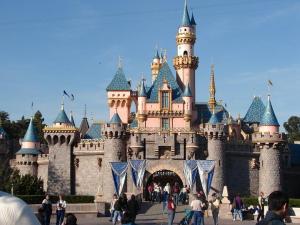 One of my professors asked each person in the class to make a list of the top ten most important sites /places /buildings. If he’d presented it as a quiz, or added the word “historic” it would have completely altered the way I thought about the question. But I was given the leeway to define importance (what matters) in my own way. It was fun — if a bit overwhelming — to think about all the possibilities. I limited myself to the United States to keep my brain from exploding. And I included the first McDonalds and Cinderella’s castle at Disneyland because they were icons representing entities that defined modern culture internationally. My point is, take away the intimidating words, make “historic preservation” about a place that matters — whether it’s neighborhood or burger shack, and you engage people.
Further evidence of terminology intimidation? I have a friend who reads this blog. A smart friend. A friend who likes many of the same things I do. But the friend has never commented on a single post. I suspect this is because there’s an internal monitor that says without “knowledge” of the subject of historic preservation, their opinion might be “wrong” somehow. What if they call that Queen Anne building a Victorian house and it’s wrong? Well, both are right but maybe one is more “right” than the other. All over the internet, people weigh in with opinions on songs, movies, politics, or starlet’s fashion choices — but generally historic preservation only spurs public debate over demolition or funding issues.
So we need a phrase along the lines of “Place Matters” — something that is less tagline but still branding-friendly. (You can look forward to a t-shirt contest in the future!)
There are so many historic preservationists out there who would never identify themselves as such. And that’s detrimental to the various organization attempting to undertake historic preservation in all its various forms. So everyone put on your thinking caps and come up with new ideas.
And if you’d like a bit of a chuckle, below is the link to two Glaswegians having a merry conversation about “place.” I knew the Glasgow before-and-after they marvel at, the sooty city they describe as being “black and white” that recently, in comedian Billy Connolly’s words, pulled back the sunroof and let the light in.
It’s a great example of how to mainstream historic preservation the “Place Matters” way.
Later, Connolly mentions his home in Scotland. “Is it a castle?” asks Ferguson. Connolly answers that it’s a baronial house. He could have added the usual sort of guidebook definition along the lines of “Buildings of the style frequently feature towers further adorned by small turrets. Roof lines are uneven, their crenelated battlements often broken by stepped gables. While small lancet windows may appear in towers and gables, large bay windows of plate glass were not uncommon, but even these would often have their individual roofs adorned by pinnacles and crenelation”
Yawn.
Instead, Connolly explains that Scottish Baronial style has pointy towers, the kind of pointy towers you trap virgins in.
See? “Pointy towers you trap virgins in” has it all over “pinnacles and crenelations” for the mass audience.
If the Eskimos have many words for “snow”…
…why are we stuck with this one phrase “historic preservation” with all its negative connotations — say the words and raise the hackles of property rights proponents who resent regulation of any kind, minorities who question the costs and rewards, developers who find it obstructionist and burdensome, elite rich who will accuse preservationists of being elitist in heated battles over demolition of some grand old irreplaceable pile, and even some in the field with concerns that “preservation” amounts to creation of an artificial Disney-like experience of time and place.
Vince Michael, at his insightful blog Time Tells, has written a thought-provoking post inspired by preservation economist Donovan Rypkema’s talk at the recent National Trust for Historic Preservation Conference. Rypkema called for preservationists to reestablish the relationship between why something is important, how we preserve it, and how we define “preservation.”
Michael proposes the phrase “heritage conservation” as a more apt term. Preservation as it is needed in modern times is “not about fixing something in a certain period of time,” but “about managing change over time.”
Michael writes
To preserve means to fix at a point in time – in effect, to remove something from history. I began my preservation career nearly 27 years ago by helping create the first heritage area, and our goal then, and now, was managing change, not stopping change. Heritage conservation is about managing change – planning – based on the inherited culture and cultural artifacts of a place. It is about the individuality and uniqueness of place. What we do is follow a process that insures that change happens in concert with a place’s values and valuables.
Do click on over and read the entire post.

Frozen in time
I like the notion of “heritage conversation” as it speaks to that which we have “inherited” and what we choose to do with what’s been passed down over generations. As Michael notes, not every building is the architectural equivalent of a Rembrandt and as an individual object, does not perhaps merit awed reverence and costly “preservation.” But that modest building grouped with others becomes the setting for a story about ourselves and where we’ve come from.
I’ll just be here pondering questions about artificiality and authenticity, layers of culture and meaning, and the regulation of aesthetics and how that supports or smothers the growth of place and individuality.
1104 Spring Garden Street — Civil War

Some buildings are like rare artworks, created by famous architects and listed on rosters of distinguished architecture. Most buildings do not fall into this category though it doesn’t mean they are without value. I am always fascinated to discover evidence of the people or things connected with a place in a sort of mini-museum approach to understanding how it contributes to its time and history.
I recently came across a New York Times feature on the story behind the photograph above of the three children, which was found in the hands of a dead Union soldier in the center of the fields of dead at Gettysburg.
This article from the Philadelphia Inquirer, October 19, 1863, was the first attempt to locate the man’s family and determine his identity. It had come into the possession of a doctor who treated wounded Gettysburg soldiers and, either out of kindness or potential for profit, he made it his mission to publicize the image.
After the battle of Gettysburg, a Union soldier was found in a secluded spot on the field, where, wounded, he had laid himself down to die. In his hands, tightly clasped, was an ambrotype containing the portraits of three small children, and upon this picture his eyes, set in death, rested. The last object upon which the dying father looked was the image of his children, and as he silently gazed upon them his soul passed away. How touching! how solemn! What pen can describe the emotions of this patriot-father as he gazed upon these children, so soon to be made orphans! Wounded and alone, the din of battle still sounding in his ears, he lies down to die. His last thoughts and prayers are for his family. He has finished his work on earth; his last battle has been fought; he has freely given his life to his country; and now, while his life’s blood is ebbing, he clasps in his hands the image of his children, and, commending them to the God of the fatherless, rests his last lingering look upon them.
When, after the battle, the dead were being buried, this soldier was thus found. The ambrotype was taken from his embrace, and since been sent to this city for recognition. Nothing else was found upon his person by which he might be identified. His grave has been marked, however, so that if by any means this ambrotype will lead to his recognition he can be disinterred. This picture is now in the possession of Dr. Bourns, No. 1104 Spring Garden [Street], of this city, who can be called upon or addressed in reference to it.
The children, two boys and a girl, are, apparently, nine, seven and five years of age, the boys being respectively the oldest and youngest of the three. The youngest boy is sitting in a high chair, and on each side of him are his brother and sister. The eldest boy’s jacket is made from the same material as his sister’s dress. These are the most prominent features of the group. It is earnestly desired that all the papers in the country will draw attention to the discovery of this picture and its attendant circumstances, so that, if possible, the family of the dead hero may come into possession of it. Of what inestimable value it will be to these children, proving, as it does, that the last thoughts of their dying father was for them, and them only.
Click on the link or photo above to read to entire five-part series that explores the identity of the soldier.
Dr. Bourns’ building no longer stands, but one that he would have seen every time he left his building still stands. It is a landmark that still towers over the neighborhood, but is in dire need of dollars and community support.

Church of the Assumption, 1100 block of Spring Garden Street
On the opposite side of the street, on the same block, rise the twin spires of the Church of the Assumption, designed by Irish immigrant Patrick Charles Keeley, built 1848-49. The church was added to the Philadelphia Register of Historic Places in 2009 thanks to the extraordinary efforts of historic preservationist Andrew Palewski who learned that the site was being prepped for demolition. Further details at PlanPhilly, here.
Foto Friday

Sometimes I wish all public buildings could feature sculptures of mythical creatures….
(Don’t you love the owl tucked in there?)
Foto Friday
I love the ghosts you can read on this wall that overlooks what is now an empty lot.
Not far away from this site is Franklin Court, that includes a wall like this as part of the exhibit about Franklin, his life and his lifetime interests, which included fireproof buildings.

That which once was
The Big House: A Century in the Life of an American Summer Home
Welcome to a new feature here at the Time Machine — reviews of books about “place,” history, family or why we “preserve.”
Over the summer I read a book that seemed to touch on all of these, but I found it so incredibly engaging and charming, found the author’s ability to weave recollection with actual history so mesmerizing, that I just couldn’t figure out how to share it with you without writing some sort of garbled, breathless, quote-heavy mess that would take all the fun out of reading it yourself. And then, voila, I discovered the book reviewer of my dreams: Anne Fontaine who is articulate, insightful and has a wide-ranging understanding of art, science and everything inbetween. So, herewith her take on The Big House: A Century in the Life of an American Summer Home by George Howe Colt.
Imagine knowing, from the time you are very young, that you will see your cousins every year, spend weeks in the company of your parents, grandparents, assorted aunts, uncles, and visiting guests and, even better, get to swim, sail, play tennis, fish, and explore in a casual sea-and-sky atmosphere of complete belonging and wild beauty. You will understand, then, George Colt’s heartfelt attachment to the artfully assembled, Sardines-worthy collection of exposed studs, embellished gables, and ancient fixtures of his family’s summer home. Built in 1903 on a bluff called Wing’s Neck overlooking Buzzard’s Bay on the Cape, it has been weathered and steeped in the memory-enhancing qualities of sea-salt air, adding enviable cachet to the everyday memories and associations that would, in any event, magically turn a wood-shingled, eel grass-stuffed building into both family member and identity.
Scattered throughout the house, the accumulated flotsam of summer success is displayed with relaxed abandon. The sailing pennants, tennis trophies, and paper silhouette memorials of local fish caught by variously-aged relatives celebrate their individual achievements and provide a sense of continuity to what was essentially a benevolent, if somewhat insular, club. George Colt and his extended family were reminded of, and immersed in, family history every summer of their lives. The Wing’s Neck house served as a touchstone, restoring them during their stays while providing a new batch of memories to sustain them until they returned.
The Big House is also a warts-and-all (mostly all) tribute to Colt’s entrenched New England family. Their hail-fellow-well-met openness, often at odds with remnants of Puritan stoicism, was a source of both fascination and frustration for him. Interlaced with his candid discussions of their joys and sorrows is the chronicle of a small town adjusting to the influx and exodus of residents as fortunes were found and lost. The amazing beauty of the place continues to draw a steady stream of admirers to the point of risking its own ecological health, a process Colt’s family witnessed from its beginnings. It becomes very clear that along with the rare privilege of being a resident in such a place comes the additional responsibility of being a caretaker for its future. George Colt’s family has managed that responsibility well; his wonderful, nostalgic book will inspire a rush of similar memories in those who have also spent long youthful days at the beach, inspire curious others to peruse coastal real estate offerings, and generally underscore the magic and importance of having some form of tradition in all our lives.
Click the book cover image above for more info at Amazon.
To visit vicariously, click here for the Wing’s Neck blog (and don’t miss the pictures of the wagon parade).
Click here to visit Anne Fontaine’s Penny Candy Reviews to find more books for your reading list!
An excerpt from The Big House: A Century in the Life of an American Summer Home
It is an extraordinary structure, a massive, four-story, shingle-style house as contorted and fantastic as something a child might build with wooden blocks. My grandmother once wrote that while growing up she had been embarrassed by its whimsical appearance until, reading a book of fairy tales, she came across an illustration of a castle of similar design.
The peaked roof, covered with bays, gables, and dormers, is pitched as sharply as a wedge of cheese stood on its rind. The walls are ringed with porches and breezeways. Two huge chimneys lie diagonally along the roof, as if they had toppled during a storm and miraculously come to rest with every brick in place.
Children love to count the rooms, of which there are nineteen (or, if you count the bathrooms — as children usually do — twenty-six). There are eleven bedrooms, seven fireplaces, and a warren of closets, cupboards, and crannies that four generations of Wings Neck children have used for games of Sardines.
From the water, the house appears to rise from the pines like a ship from an enormous green wave. The most prominent house on Wings Neck, it has been a familiar landmark to generations of sailors approaching the harbor. Several years ago, I was at a party in Boston, talking with someone about sailing in Buzzards Bay, and I mentioned that my grandparents had a summer house on Wings Neck. As I began to describe it, he interrupted me: “Oh, you live in the Ghost House!” Wings Neck children also know it as the Haunted House, the Wicked Witch of the West House, and the House of the Seven Gables. (Actually it has eight.)
Wow! What a deal!
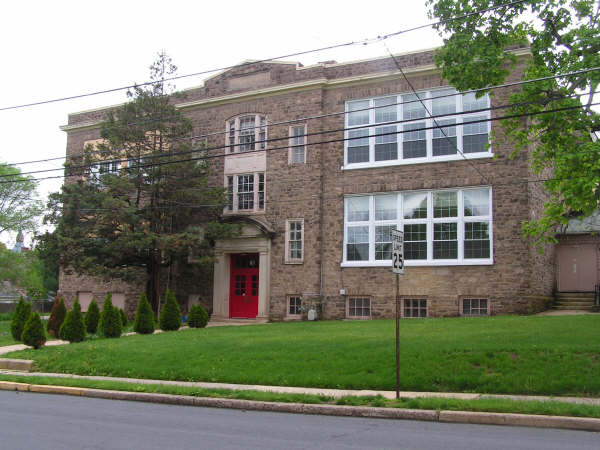
Can I interest you in a 1913 masonry school building for $1?
Nothing against the train club that meets in the basement that is thinking of buying it, but I have doubts that their proposal is sustainable over the long haul.
This building seems to me to be perfect for conversion to residential. I’d move there in a flash. Our tour of the building revealed high ceilings, wonderful old beadboard and magnificent windows. There’s a park right across the street (too bad “park” these days is less about Olmstedian concepts and more about a patch of green with a few trees and a picnic table…), it’s in the middle of a Victorian commuter neighborhood, which means it’s walking distance from the train.
 This is the suburbs where that [frankly, misguided] American dream of a single family home surrounded by green turf holds dominance. But there are a variety of “types” that would love to live in the burbs in city style housing. The empty nester type who is downsizing, but wants to stay close to family. People like me, who wish they still lived in the city but while we’re in the ‘burbs wish we didn’t have to deal with lawns to mow and gutters to clean (but who can’t quite adopt the notion of living in one of a row of identical townhouses). The just-starting type who isn’t quite ready for a house, but just came out from the city where they dearly loved their loft-style apartment in the old lace/shirt/chocolate/lamp factory.
So sign me up for 2-A when the renovation is complete. So long, big yard!

"Give me a penthouse view!"
Or, if someone wants to turn it into cool artists’ studios (amazing light!) that would be a nifty idea, too!
Network this one, people! This is the sort of building that adds distinctive character to a neighborhood and shouldn’t be demolished.
It’s $1.00.
For the price of the McDonald’s value meal, you can have a 1913 school building and the 1891 annex. Sounds like a deal to me!
Square footage and info like that is here, in the Real Estate section on the Bulletin Board.


 Nostalgic for the original Wayback Machine?
 My Own Time Machine: Buildings, Places, People & Things