The Place to be — PhilaPlace
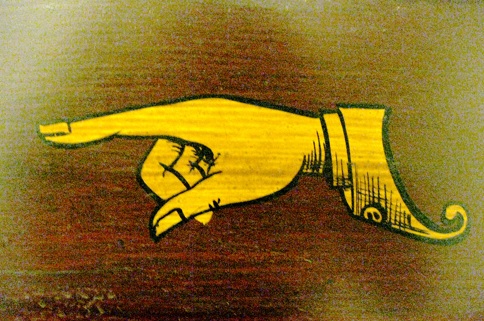
Directional in hallway at Philadelphia City Hall
Mark your calendar — on Wednesday, December 9 the place to be is Philadelphia City Hall for the official Launch Party of PhilaPlace, a project of the Historical Society of Pennsylvania.
PhilaPlace.org is a portal for exploring the history, cultures, and architecture of Philadelphia’s neighborhoods.
- Share your own memories, photographs and video
- Learn the history of your favorite place in the city
- Use the interactive features to view maps and create your own tour
- Explore the many ways the city’s neighborhoods have changed over time
Mayor Nutter will make the official announcement in the elegant Mayor’s Reception Room followed by a people’s party in Conservation Hall, with refreshments and live entertainment. What conversations will you have about the city’s history — where it’s been and where it’s going? What might you contribute to the story?
RSVP by December 4 to ekretschmar@hsp.org or 215/732-6200 x. 300, or register online at http://www.hsp.org
If you can’t attend, be sure to visit www.PhilaPlace.org, the new website for “the City of Neighborhoods”
Foto Friday
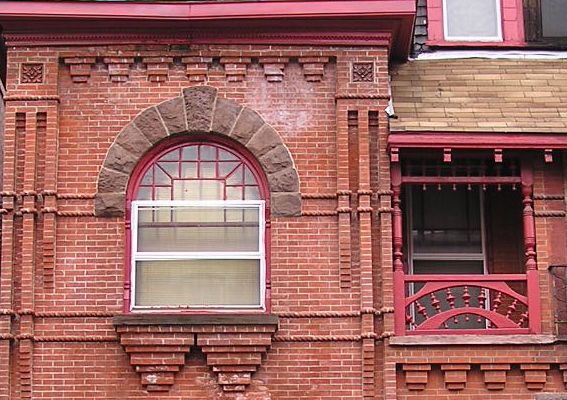
Detail of townhouse in row designed by architect Willis Hale. 1500 block of North 17th Street, Philadelphia
On the first day of Christmas, my ____ gave to me….
I was in a bookstore the other day and exlaimed to my kids “LOOK! Lego is doing architecture!”
“Yeah,” they said. “We know.” They are huge Lego fans, though their tastes run more to Star Wars or Knights or Space Police. They only get excited about the Empire State Building when King Kong is on top of it in a 1933 b&w movie, and even then, only if I serve popcorn.
Later, while they were making their own Christmas lists, they arrived in the kitchen with sly smiles on their faces. “So which did you like better?” they inquired. Slyly. “The landmarks or the architecture?” I asked for a clarification on what the difference was. It seems Landmarks rise high in the sky and Architecture has the name of a well-known and much-revered architect (who rates a ® after his name) attached to it.
I suspect they may chip in and get me one of these (so I can enjoy Lego assembly along with them on Christmas morning).
You may want to add one to your shopping list for the building lover you love.


Landmarks of our lives
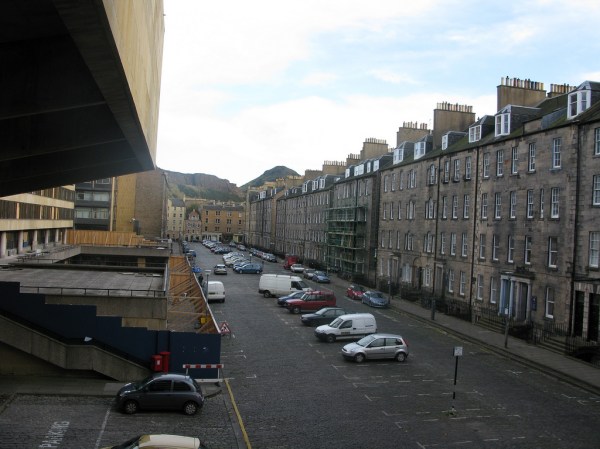
Image of Buccleuch Place from Edinburgh Day by Day, by BondBloke
I enjoy a number of blogs — about history, architecture, photography, arts, crafts, and those of people I’ve come to know and love. (Some of these cover more than one category.)
A recent post from photographer (and writer and film producer) Alessandre de Souza at Gypsy Girl’s Guide reflected on a time and place that changed her life (landmark moment, with a landmark, get it?). Oh, go on, you can read her landmark post (and admire her stunning photograph of a golden and glittery Big Ben) and then come back.
She asks the question
Can you think of any time or landmarks in your life that can teach you something about yourself that you’ve forgotten? We hold so many stories within the gaps… Find something heart warming and worth honoring about your life today.
I’m passing the same question on to you — what do you recall about an important passage in your life, and what built landmark do you associate with that time?
It’s an intriguing thought, this idea of a significant moment in one life bound up in a building. Your historic connection is of life-changing significance, yet will never be part of the site’s written record. It boggles the mind to think of all the unwritten “moments in personal history” that could exist on a single block.
Are you thinking of your life landmark?
As for me….
In terms of transformation, the year I spent in Edinburgh was probably my chrysalis year. While the dark, brooding castle on the Royal Mile overlooking the entire city is a more obvious and iconic landmark, there’s a story about a building on Buccleuch Place. (Pictured above is Buccleuch Place, near the University of Edinburgh.)
College-era. (Pre-computer) That year I packed a suitcase, hugged my folks, and headed off to a foreign country without a place to live. I got to London, got a train to Edinburgh and arrived there at dawn.
I looked at a map in the train station, checked the address on a piece of paper in my bag and made my way to the student housing office on Buccleuch Place as the sun came up. Of course, nothing was open at that hour of the morning, so I sat on the doorstep wondering where I’d find myself at the end of the day.
This building — that doorstep was a leap of faith for me. It represented my ability to be independent and to find my way in the world. (Literally, the world as I was in a foreign country and would spend the rest of the year meeting new people and using holidays to travel through Europe alone.)
After the office opened, and I met with someone on staff who made some calls, I had a new piece of paper with an address scribbled on it. I hailed a cab, loaded in my HUGE oversized suitcase (do they even make them that large anymore?) and headed to the other side of town. The cab pulled up at 35 Drumsheugh Gardens (pictured below). Living there that year changed my life, but it all started on the cold pavement outside that university office as the sun came up.
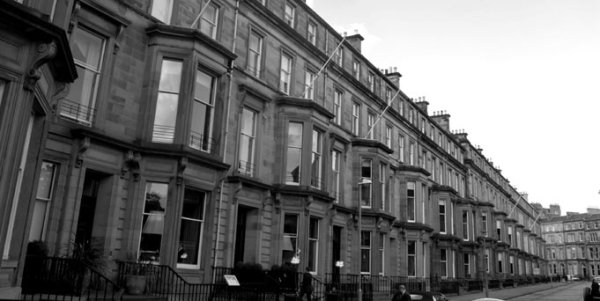
I lived on the top floor, overlooking Drumsheugh Gardens. The building now houses The 4-star Bonham Hotel.
Not a page from your father’s history book…
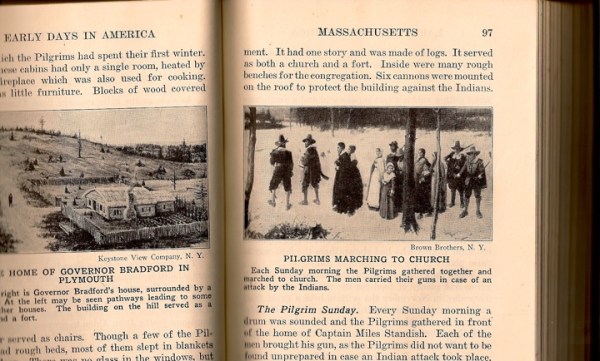
In preparation for Thanksgiving, I consulted my father’s 1945 American History book looking for a hilariously out-moded take on Pilgrims and the red savages who brought them turkey. Unfortunately, I found only bland little USA Today-type event summaries, none of which were the least bit amusing. Simply boring.
Poor old history with this terrible, terrible reputation for being dull. Yawn-inducing even. Shame on those history teachers who essentially taught a timeline and never clad the skeleton in thrilling flesh and blood. (I once had a history teacher who bored even himself, and gave his rote lecture while stooped over a putter or looking longingly at the golf course outside our big plate glass classroom windows…)
This fall, when I attended my middle school son’s back-to-school night his history teacher immediately addressed history’s bad rep (wisely understanding, I suspect, there were parents in the room having dreadful flashbacks). I misplaced the copious notes I took with his exact words, but I was impressed with the almost Sherlock Holmesian approach of research and deduction that was explained. My son is learning all sorts of impressive techniques that will enhance his understanding of the stories of nations and peoples of the past — and the present. Stuff I wished I’d learned when I was his age.
Of course, where I really want to be is with my other son, in elementary school.

What fun!
That’s where I spent this afternoon, crawling around on the floor in my paint pants, helping them get ready to study Colonial America. Talk about flesh and blood — they actually become their own living history experience. Today we made murals for their presentation and next week invited guests will watch them as they learn — and as they teach us history.

Of course, I’m probably a terrible dweeb as a volunteer. I tried to make the measuring part about math and posed arithmetic questions. Then I got worried we were taking too long laying out our sketch, while others seemed to have already started mucking about with paints. But how I wished that I’d brought a couple of my books with me! (Dweeb alert!) We talked about the details of the picture and I reminded them of what they’d probably seen on the recent field trips they’ve made to area historic sites.
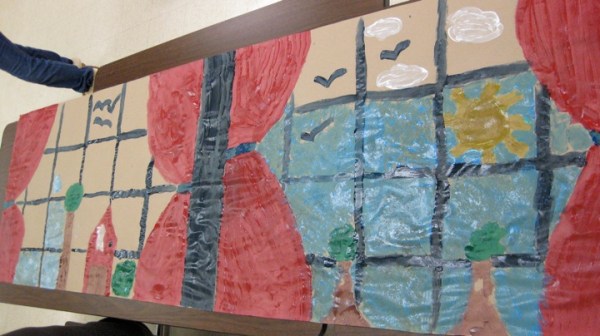 I wanted to show them redware. I wanted to show them Colonial portraits — especially of children — and point out the details: the clothes and toys, the animals, the windows and what you might see through them. I wanted them to think about a life without electricity — how candles and lamps were the only way to pierce the darkness once the sun went down. (My son still talks about when the power went out and we used only candles; how tentative light is when it is a candle flame in a drafty house going up a staircase. If it goes out….)
Our mural came alive with details. The artists called for a shelf, and a pot on it. We talked about what it might be used for. What should hang on the wall? (It probably would have been a mirror.) The young man suggested a painting of a boat. (With Thanksgiving just past, I suppose it makes sense our artist chose the Pilgrim’s Mayflower, rather than the Welcome, the name of the ship William Penn sailed on.) There’s a cat gazing out the window, a redcoat walking along a trail, a bird flying to the tree, a dog chasing a squirrel, a cow grazing, and a barn — a big red one.
I was amused by how many red barns worked their way into the murals. According to third graders, most views ought to have a red barn! This was interesting because, having looked at their field trip photos, I suspect they saw mostly weathered grey or stone barns. (Ah, Margaret Wise Brown, your Big Red Barn is iconic!)
Happy Turkey Time

My grandfather, Paul White, gave me his postcard collection, which begins n the early 1900s. This card was posted November 27, 1907 and is addressed, simply, to “Master Paul White, Tylersport, Pa” with a green one penny stamp with Ben Franklin’s image on it. The card is by Raphael Tuck & Sons, “Art Publishers to Their Majesties The King & Queen” (that would have been Edward VII and Queen Alexandra).
Foto Friday
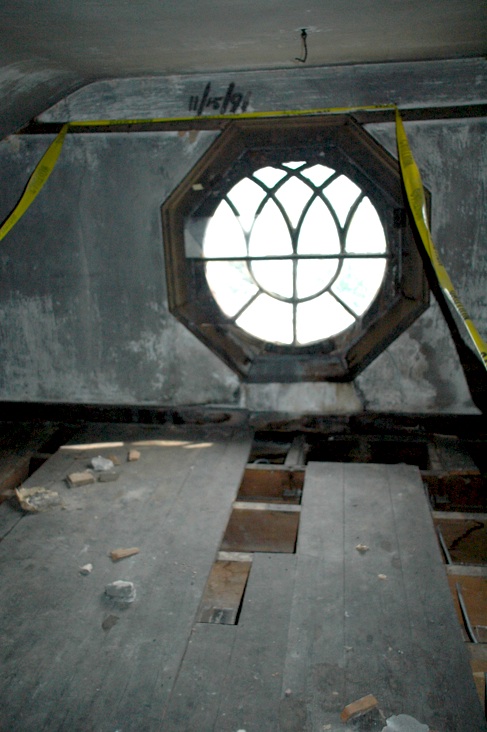
The National Historic Landmark site The Woodlands in Philadelphia
From the NHL database
A 1788 remodeling of an older Georgian house transformed The Woodlands into one of the earliest and most advanced examples of Adamesque style domestic architecture in America.
In 1840 the land surrounding the mansion was converted into a Rural Cemetery and the Woodlands is “home” to many prominent Philadelphians.
The Woodlands received a 2004 Federal Save America’s Treasures matching grant in the amount of $200,000 to replace the deteriorated roof and to address structural problems.
The Historic Structures Report includes excerpts from correspondence that would bring a nod of recognition to any old house owner, as the gentlemen share recommendations for plasterers and other skilled craftsmen (along with a warning about schedules to prevent the other from poaching labor) as well as laments about leaky roofs and mounting costs. Some things never change.
This is one of those behind-the-scenes views of old historic mansions that one doesn’t usually get to see on a tour. And yet, this is always the part I want to see most. The dusty, lived in aspect of a building is much more appealing to my imagination than the often artificial-feeling public showrooms. When I toured the Biltmore, up the stairs, down the stairs, from the dining hall, to the bowling alley, through the kitchen and on, the places the piqued my curiosity were the unseen behind closed doors. Oh, we all know what closed doors can do to fire an imagination. Just ask Pandora or Bluebeard’s wife.
Have any struggling and highly evocative sites experimented with doing away with historical interpretation altogether and attempted a “let’s imagine the story as we tour” tour? It could be a variation on the murder mystery parties that were popular a few decades ago. Could be an interesting supplemental income targeted to adults looking for a creative party idea or corporate groups looking to exercise their brainstorming expertise in an offbeat way.
The growing trend is trendier in tough economic times

Hope Lodge
Historic sites all over the country are struggling. The reasons are many and diverse. Small staffs and small budgets. The challenge of engaging a distracted public. Funding cuts. Economic downturn. Poor management. Interpretation in need of resonance and relevancy. An aging volunteer population. Need for costly curatorial climate control upgrades. Encroaching development. Poor budget choices. Shifting urban populations. “Teacup tours” that evoke yawns instead of emotions. Founding fathers are “out,” diversity is “in.” Stagnation. Complacency and a “someone built it, they will come” attitude. And so on.
So it’s no real surprise to read in the Philadelphia Inquirer that Hope Lodge and some other state sites and staff positions are “out.” In a recent post I flagged that Hope Lodge knew its days were numbered and was seeking an exit strategy (this may help explain why their website has been so out of date).
Staff reductions at the Pennsylvania Historical and Museum Commission, the agency taking the greatest proportional loss in its workforce, will mean suspending services at six historic sites, closing the state museum in Harrisburg two days a week, and eliminating all new exhibit spending. The state archives also will close Mondays and Tuesdays.
Educational programs and other services at historic sites, including Graeme Park and Hope Lodge in Montgomery County and Washington Crossing Historic Park in Bucks County, will be discontinued and buildings there “mothballed,” Wyatt said.
Kirk Wilson, spokesman for the historical commission, said the agency is hoping local “friends” volunteer groups that support the parks will step up to keep activities going. The agency has nearly completed a deal with the Friends of Brandywine Battlefield Park in Delaware County to help keep that site open.
The Department of Conservation and Natural Resources, losing nine staff posts, plans to reduce services at state parks by cutting back on educational programs and shortening seasonal hours at pools, beaches, and campgrounds.
Not your father’s scarecrow (but perhaps Washington Irving’s?)
 The National Trust for Historic Preservation highlighted the annual invasion of the scarecrows at their beautiful Lyndhurst Estate in the Hudson Valley. I wanted to share the feature here because it’s a great example of creative thinking that accomplishes many objectives:
- promotes the Lyndhurst site
- creates important community partnerships
- engages students
- encourages them to connect with history
- connects history and art expressed in scarecrow form!
- results in a huge visual statement, ideal for media coverage
- creates a great familiy -friendly event to attact guests — even repeat guests who make it an annual event
 Here’s the NTHP interview with Judith Beil, curator of education at Lyndhurst. (To view the flickr slideshow, click here.)
NTHP: Judith, tell us about the Scarecrow Invasion and how it got started? How many scarecrows do you have this year?
JB: The Scarecrow Invasion began five years ago with just one school and 100 scarecrows. It has since grown into an event with seven schools and close to 700 scarecrows. Grade levels range between first and eighth grades. This year, we invited two Title 1 schools to participate and used our scholarship money to fund their transportation. Teachers from both schools stated: “This is the best experience that our kids will have all year.”
NTHP: Tell us about a typical day when a group of students visit to begin creating their scarecrows. What kind of themes are there? How do they decide what to make? Do they tour and learn about Lyndhurst as well?
JB: The students arrive at 10:00 AM with clothing and pre-made masks coated with polyurethane. We provide the wooden supports, straw, and staple guns. The field is organized according to schools and the students pick out their structure. They then create their scarecrow. Themes for this year’s crop of scarecrows are historical figures; famous people (including Queen Elizabeth and Julia Child); monsters; something we called “inside a teenager’s brain;” clowns; and a generic group ranging from a wood nymph to Yoda. The students also participate in one of our educational program tours according to their grade level.
NTHP: What do you think the scarecrow project brings to these kids? Why is it important for students of all ages and grade levels to participate in activities like this?
JB: This is the fifth year of the program, and we now have a waiting list of schools that are interested in participating. Essentially, the event gives students an opportunity to exhibit one of their designs – something they create – at a real museum. We like to think of it as an environmental installation. Students also research their creation in their history and language arts classes, and several groups write stories about their characters. Additionally, many art teachers discuss and review the creations in their classes.
NTHP: What other educational programming and activities does Lyndhurst offer students throughout the year?
JB: We offer a range of interactive school programs beginning with pre-school and going through high school. Educators can visit http://www.lyndhurst.org/education.html for more information.
NTHP: So, what happens to all of the materials and clothing once Halloween is over? And we have to ask – do you have any favorites among this year’s scarecrows?
JB: The clothing is removed from the wooden supports by volunteers and young adults from YAI, a day treatment facility in Tarrytown. Reusable clothing is then washed and donated to homeless shelters in the area. As for a favorite, I can’t possibly choose – they are all fabulous!
Foto Friday
 Detail of a row of houses designed by Victorian architect Willis Hale on North 17th Street in Philadelphia. This wonderfully ornate end-of-the-row example has been demolished. It stood neglected and empty for too long (if you peek through that open window you can see the hole in the roof).


 Nostalgic for the original Wayback Machine?
 My Own Time Machine: Buildings, Places, People & Things